
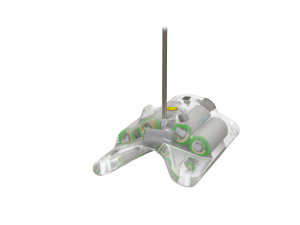
Features
- Argos
- Temperature

WEIGHT
180 g
LIFE
1530 days
DIMENSIONS (mm)
128 x 72 x 21
Key Benefits
The SPOT-317 is designed for leatherback turtle research and is the product of many development years working closely with leading researchers in the industry. This tag features an angled base to match the curve of the turtle’s carapace. This tag is attached by looping a line made of stainless steel or monofilament through the turtle’s carapacial ridge.
The SPOT-317 sends out short transmissions to the Argos satellite system. Consecutive transmissions received in a single satellite pass are used to calculate the location of the transmitter. Locations are available in near-real-time with accuracies as high as 250 meters. Global coverage by the Argos system allows animals to be tracked over long distances and in remote areas.
Wildlife Computers SPOT tags are widely used and are one of the most published-on marine satellite tracking tags on the market.
Argos
Depth
Temperature
Key Features
- Highly Customizable Data Collection and Transmitting Schedule—users can customize and prioritize data transmissions. Deployments can be tailored to achieve unique experimental objectives. Flexible transmissions provide the ability to extend the life of the tag by focusing on specific seasons or times of the year.
- Full Data Archive Available on Recovery—SPLASH10-F tags contain one GB of onboard memory for archiving data. This means when you recover your tag, your full data set is available, even if the battery is dead—data are maintained in the archive for up to 25 years.
- The Portal Advantage—SPLASH10-F tags are supported by the Wildlife Computers Data Portal, a collection of data management tools and services. Developed specifically for the display and investigation of data from Wildlife Computers tags, the data portal streamlines the processes of acquiring, preserving, and sharing data services. The portal helps collect, prepare, and analyze the data returned from the tag— via Argos or the archive. Data are easily sorted, filtered, searched, uploaded, and shared. You can see a Google Earth display of your deployment track, color-coded to show the relative age of each location. You can also set up a live KMZ to get data into your own monitoring system.