
Pop-up Archival Transmitting tags (PAT tags, also known as PSATs) provide fisheries-independent information by allowing the remote recovery of data from non-surface-oriented marine animals. Researchers attach the tags externally and program release for when certain parameters are met. Upon release, the tags float to the surface and transmit to the Argos satellite network. Pop-up tags are used to study animals such as tuna, sharks, marlin, swordfish, halibut, eels and sea turtles.
| Model | Tracking | Sensors | Sensor Data Archive | Max. Duration (days) | L x Ø (mm) | Weight (g) |
microPAT-401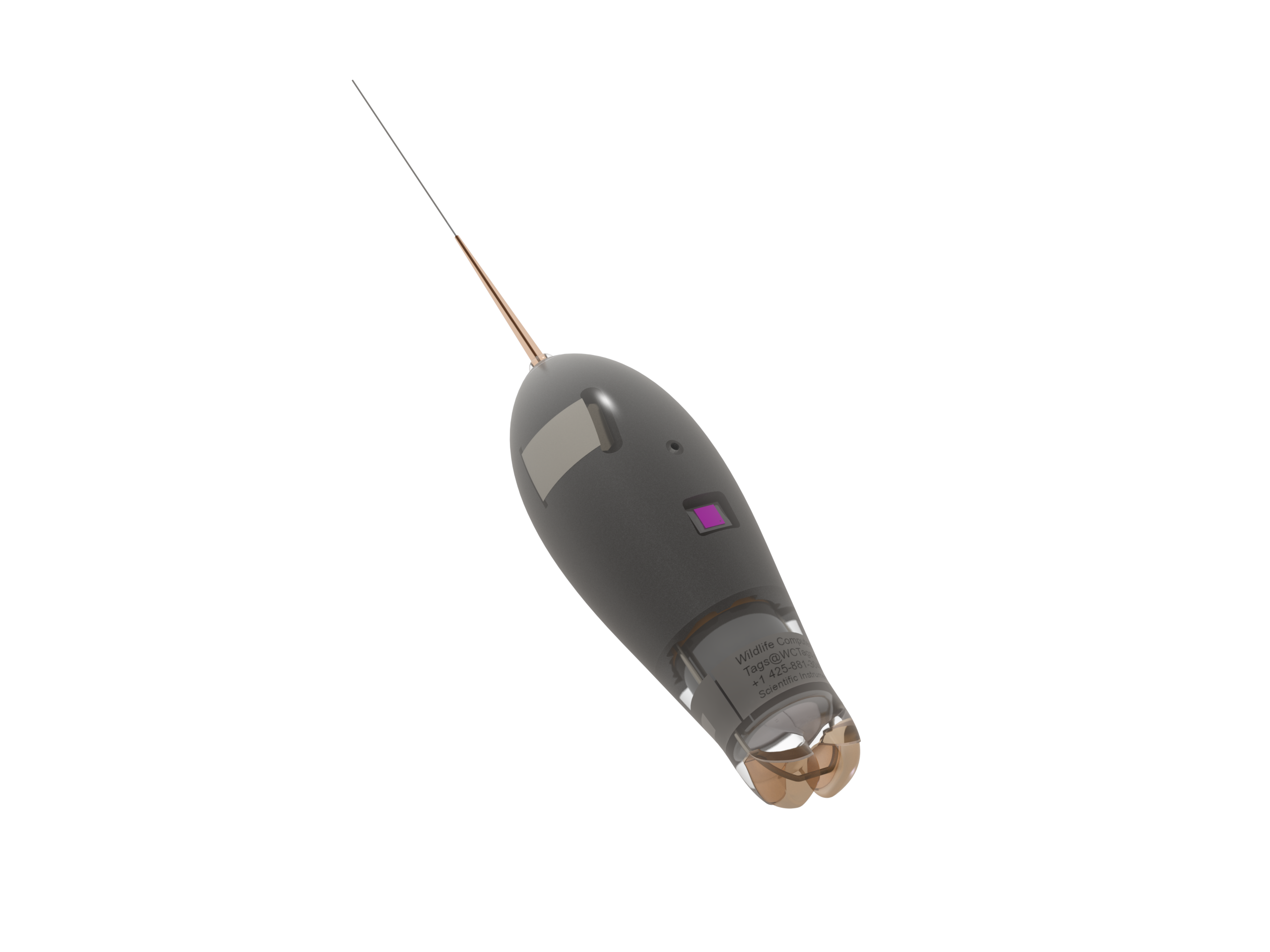 | Geolocation, Argos (Pop-Up) | Depth, Temp, Light, Wet/Dry | ✓ | 365 | 96 x Ø 33 | 46 |
MiniPAT-430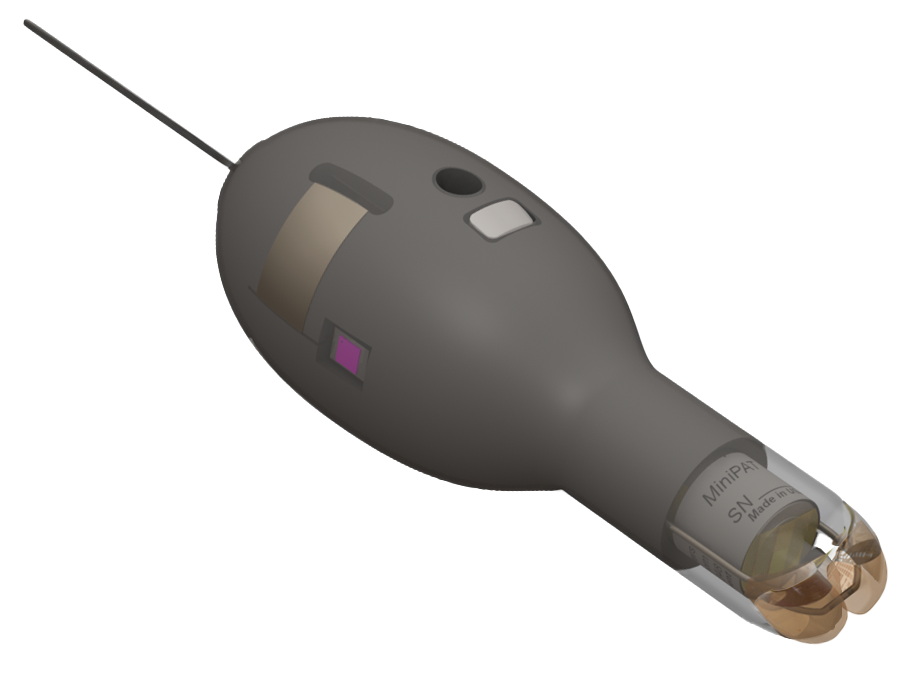 | Geolocation, Argos (Pop-up) | Depth, Temp, Light, Accelerometer | ✓ | 730 | 118 x Ø 41 | 68 |
MiniPAT-440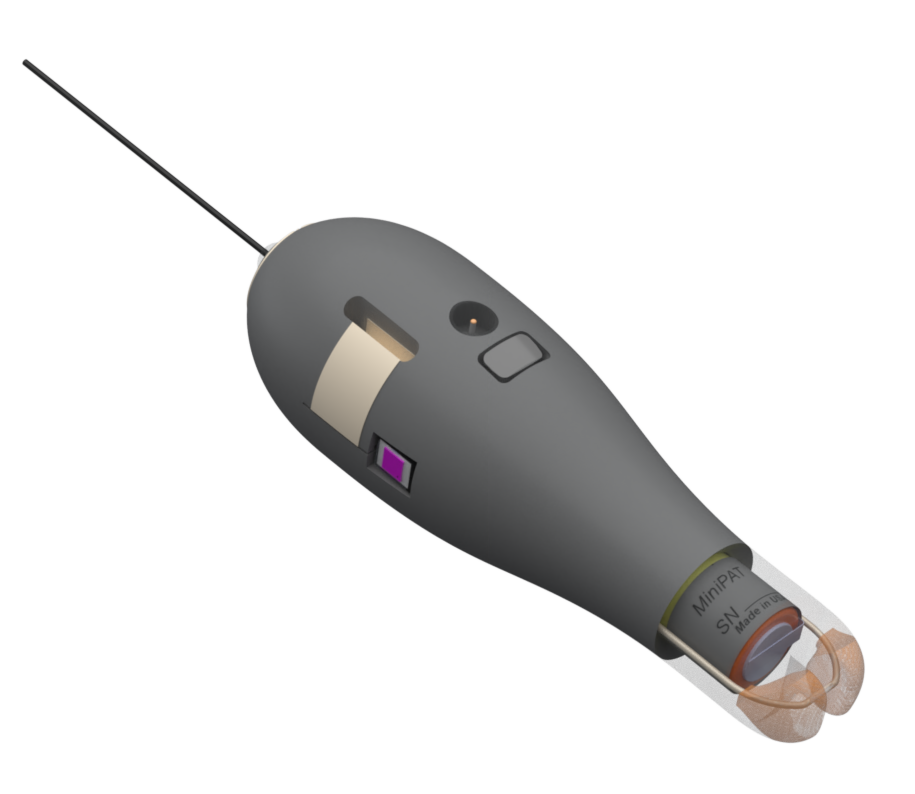 | Geolocation, Argos (Pop-up) | Depth, Temp, Light, Accelerometer | ✓ | 730 | 120 x Ø 37 | 62 |
sPAT-441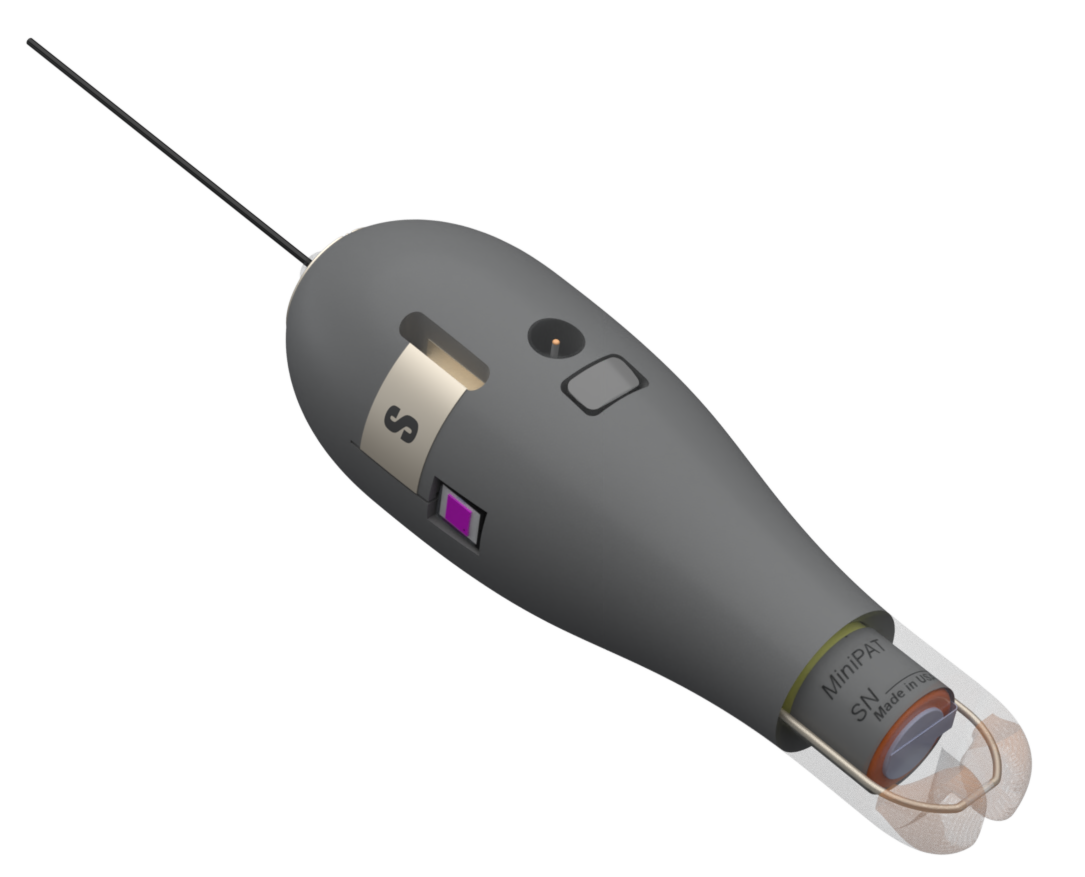 | Argos (Pop-up) | Depth, Temp, Light | ✓ | 30/45/60 | 120 x Ø 37 | 62 |
Benthic Survivorship PAT-442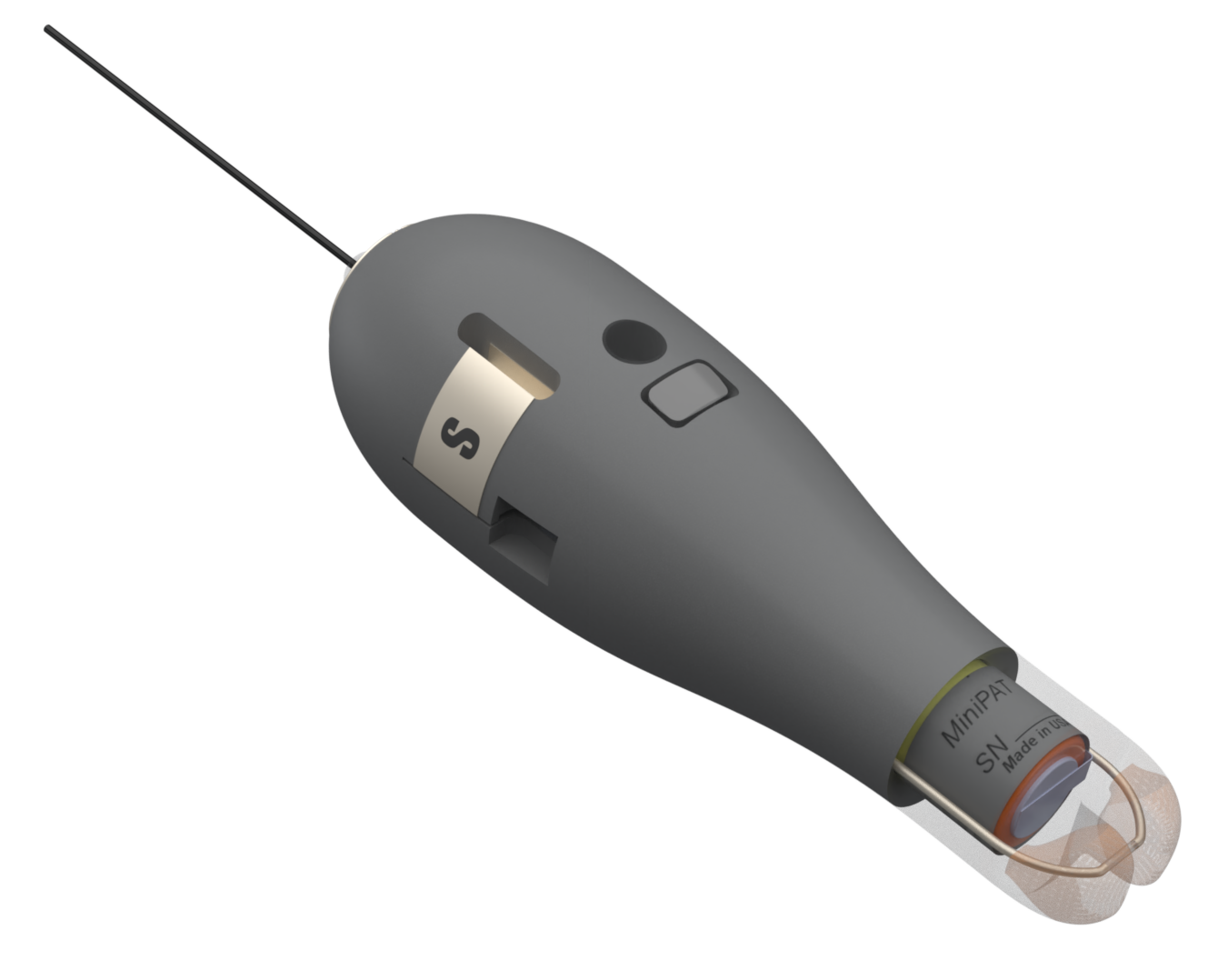 | Argos (Pop-up) | Accelerometer, Wet/Dry | ✓ | 96 | 120 x Ø 37 | 62 |
Mark Report PAT-376 | Argos (Pop-up) | Temp | 730 | 118 x Ø 28 | 44 | |
| Model | Tracking | Sensors | Sensor Data Archive | Max. Duration (days) | L x Ø (mm) | Weight (g) |
The MiniPAT tag can collect data for up to two years. However, a limited number of messages can be transmitted after pop-up before the battery expires. Consequently, longer deployments may require slower sampling rates, fewer channels sampled or duty-cycling. The sPAT tag has a fixed deployment time of 30, 45 or 60 days. This is a small representation of our available tags. Tag features and specifications subject to change without notice.