
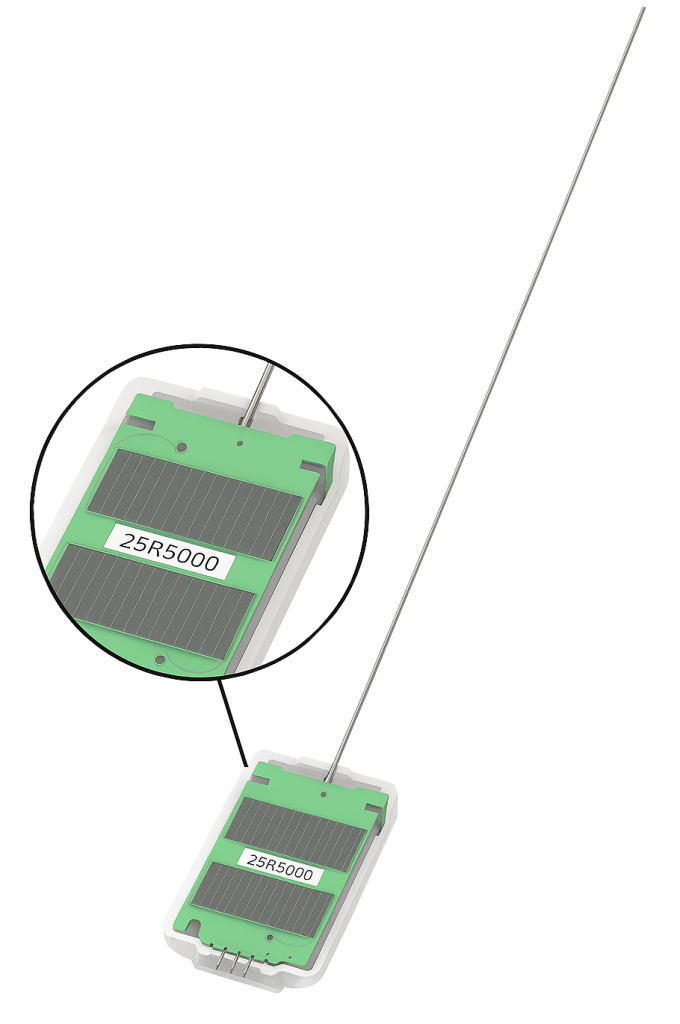
The Denali-S7 is the next-generation, solar-powered Argos transmitter tag designed specifically for avian research. Engineered for comfort and minimal impact, the Denali-S7 enables global tracking of birds weighing as little as 250 grams, with seamless data management through the Wildlife Computers Data Portal.
Key Features of the Denali-S7
Minimally-intrusive Design—the tag’s small size, low profile, rounded edges, and a strong yet pliable antenna all minimize mass, drag, and risk of injury to the bird. The tag’s smooth finish and inconspicuous antenna help preserve natural bird behavior.
Solar-powered Automation—operation is fully automated with no setup required. The tag automatically adjusts its transmission effort based on available solar charge, ensuring optimal performance across seasons and environments without the need to choose duty‑cycling settings or predict sunlight in advance of deployment.
Flexible Attachment Options—Denali is designed to accommodate whichever attachment method the researcher finds most appropriate. It is compatible with harnesses, sutures, or tape, and includes mounting holes for direct use or for securing a preferred baseplate. This flexibility supports deployment across a wide range of species and research applications.
Tested Reliability—field-and lab-tested for strength and durability, including deployments on albatross, petrel, and shearwater.
Waterproof Construction—tested to over 400 meters depth, this tag is suitable for marine and coastal birds.
Global Telemetry—provides time-stamped longitude and latitude with Argos accuracy (typically 300 m), plus sensor date including ambient temperature, battery voltage, and solar charge.
Data & Applications
The Denali-S7 will typically generate 25-75 locations per day with the Kineis system.
The Denali-S7 supports research applications like survival rates, migration timing/routes, natal dispersion, habitat preferences, site fidelity, ecological barriers, wintering grounds, and more.
Twenty-two prototype tags were deployed in the USA, North Pacific, Australia, and New Zealand during field trials, with the longest deployment exceeding 200 days.
Portal & Support
The Portal Advantage—Denali-S7 tags are supported by the Wildlife Computers Data Portal, a collection of online data management tools and services. Developed specifically for the display and investigation of data from Wildlife Computers tags, the data portal streamlines the processes of acquiring, preserving, and sharing data services. The Portal helps collect, prepare, and analyze the data transmitted from the tag via Argos. Data are easily sorted, filtered, searched, uploaded, and shared. You can see a Google Earth display of your deployment track, color-coded to show the relative age of each location. You can also set up a live KMZ to get data into your own monitoring system.
Unmatched Support Expertise— When you choose Wildlife Computers, you’re not just getting world-class tags—you’re partnering with a team that’s dedicated to your success. Our support specialists are highly responsive and deeply knowledgeable, ensuring you get answers and solutions quickly. With over 30 years of experience and more than 4,600 research articles published using our tags, we know what it takes to deliver the data you need for groundbreaking science. From troubleshooting to optimizing deployments, we’re here every step of the way to help you achieve your research goals.
User Guide – Coming Soon
This user guide gives you all the essential information needed for interacting with, and configuring this tag.
Denali-S7 Deployment Checklist
This is a useful checklist that walks you through the steps of deploying a Denali-S7 tag.
Wildlife Computers Portal
Specifications
Below are the physical specifications of the Denali-S7.
| Tag Weight (excluding neoprene) | 7.4 grams |
| Dimensions(LxWxH) | 36 mm x 19 mm x 8 mm |
| Pressure Rating | Tested to 400 m depth |
| Operating Frequency | 401.678 MHz |
| Operating Life | Unlimited with solar |
| Sensors | Temperature, battery voltage, solar |
| Operating Temperature Range | -5° C to 60° C as specified by battery manufacturer |
| Charging Temperature Range | 0° C to 45° C as specified by battery manufacturer |
| Battery Charging | Solar |
| Battery | Lithium polymer rechargeable battery |
| RF Power Output | Maximum 500 mW, typically 200 mW when deployed |
| Tag On/Off Protocol | Using a magnet |